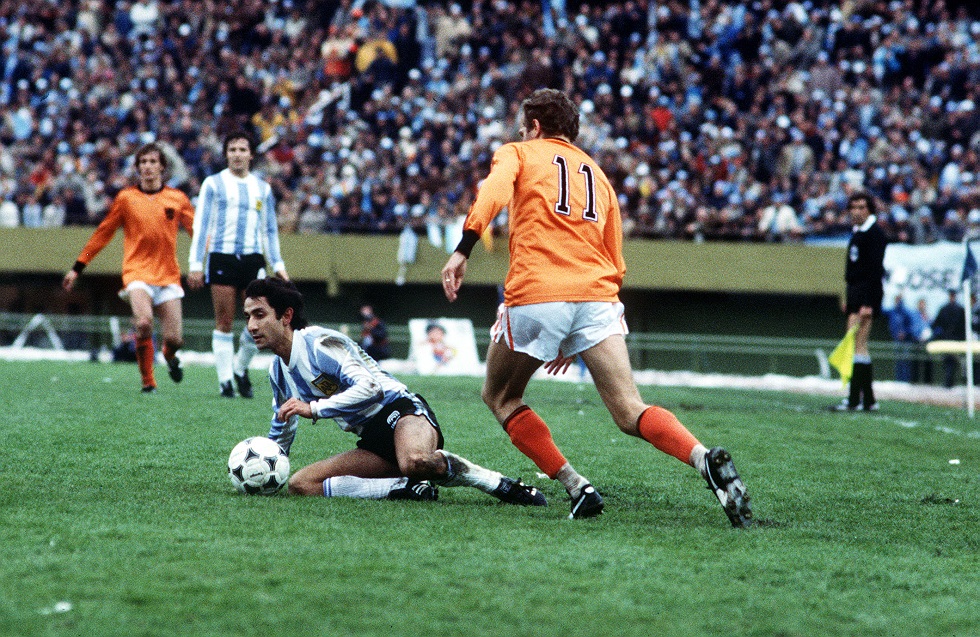
The only football twins to ever play a World Cup final grew up at PSV. René and Willy van de Kerkhof, both turning 70 today, became world famous in 1978. Their strong mutual bond flourished within the team that grew into a tight unit in the mid-1970s under Kees Rijvers, which brought PSV international fame.
Family ties have been a life theme for the Van de Kerkhof brothers from a young age. Now they are 68 years old, but they were only four when their father Rein died after a car accident. "We actually never had a father," René says. "And our mother died when we were 23. So then a lot falls away." They grew up as offspring in a family with three sisters and their brother Gerard, who is nine years older. "We were basically raised by our sisters. They had everything going for us and we were stubborn, did everything God forbade."
The Van de Kerkhof family lived on Engelseweg in Helmond. A house with three small bedrooms. "On one was our mother, on the second the sisters and the three of us in another little room of a few square meters." At eighteen, the two brothers ended up at FC Twente in the summer of 1970, where Kees Rijvers became their trainer. A key figure in their lives. "FC Twente reported to our mother saying they wanted me. But she said, 'You do know it's twins, right?' Rijvers said very honestly, 'I don't know what to do with Willy.' Our mother had to sign the contract for us and said, 'Two or none.' That's how it went."
Willy and René have a difficult entrance at FC Twente. The former is placed in the B team and the latter soon finds himself in contention with Rijvers. "He rather didn't want me to participate in the UEFA youth final tournament in Scotland that summer. But I thought: I'll never get that chance again, so I went anyway. Rijvers said I wouldn't play in the first team for the time being, but in a game against Union Teplice he needed me anyway because of all kinds of injuries. We won 2-0 and I scored both goals. After that I was never out."
Willy also made his debut sooner than expected. "In the beginning our Wil and I played as outfielders, he on the left and I on the right or vice versa. But when Eddy Achterberg dropped out due to a leg fracture, our Wil suddenly had to play in midfield. That turned out to be the solution. Somehow Rijvers was a hard-head, but when he saw that it was better for the team, he was also flexible. We were both quite stubborn."
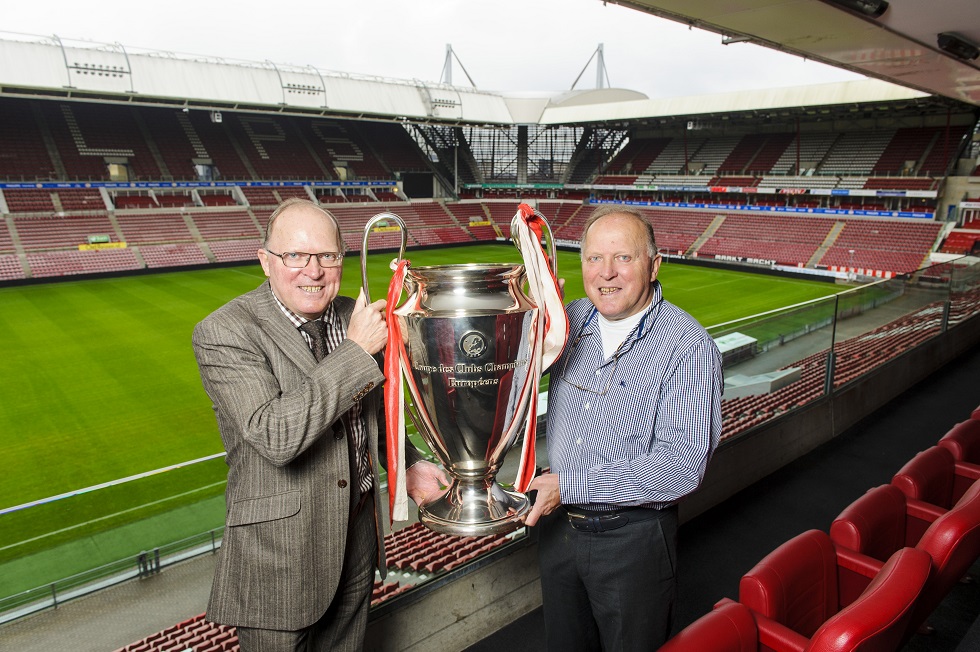
FC Twente is a family team, where the Helmond twins soon felt safe and secure. "I lived by myself that first year with an older couple," René says. "Then you still go out sometimes. Rijvers kept an eye on all that. As soon as we set foot outside the door, the little one knew. He had his informants everywhere."
The coach insists that young players should marry early. "He wanted us to have permanence at home and not live as loners in such a city," he said. Willy married at 18, René waited another year.
At PSV, Rijvers continued his philosophy between 1973 and 1980. Besides Ralf Edström, the two Van de Kerkhofjes are the first purchases under his leadership. Team building forms the basis under a strong unit. "Of course, we only had sixteen players, twelve of whom could have a place in the starting eleven. The others were really reserves. Nowadays they have double the number. If there were problems back then, you could solve them quickly together. Rijvers was very keen on that. Even if something was going on at home with the children or other family members, he would send you away from training. He found it very important that the private situation was stable. Rijvers knew our situation well, especially after our mother died in 1976. He was very concerned about that, but that applied to every player. Rijvers had time for everyone."
Thus, PSV quickly grows into a close-knit unit. Although Rijvers, together with manager Ben van Gelder, is smart enough to value everyone. There is a Premium Salary Scheme for the five best players: besides the Van de Kerkhof brothers, these are Jan van Beveren, Willy van der Kuijlen and later Adrie van Kraay. "Those guys got an extra bonus after every six games based on their place in the league table. Their thinking was: you have to pull the cart, so you just make sure we are as high as possible. That could add up to 25,000 guilders a year. The other players didn't know anything about it. You would think: everyone should have the same, but it wasn't as if all salaries were the same. That worked well, although it's not like there was never any disagreement either. One time I myself was on the pitch with Huubke Stevens rolling around. Then Rijvers sent us away and just said, 'You guys go fight it out in the dressing room, I'm not getting involved. And the next day it was over again."
"If someone once did something wrong, we corrected each other. I remember when Jean Willrich was bought. A German, who came in and didn't give anyone a hand. Rijvers sensed that perfectly and put Stevens in man coverage on Willrich during training. He hit him everywhere he could. The next morning he introduced himself nicely to everyone... Pressing heads, done." René also has his quirks. "I was still sometimes late in town, because I found it relaxing. But the others called me on it, because I was also playing for their money. The only one who stayed away from that was The Pit. He was too sweet and liked it a lot. I also always said: if De Kuil had had my mentality, he would have become better than Cruijff."
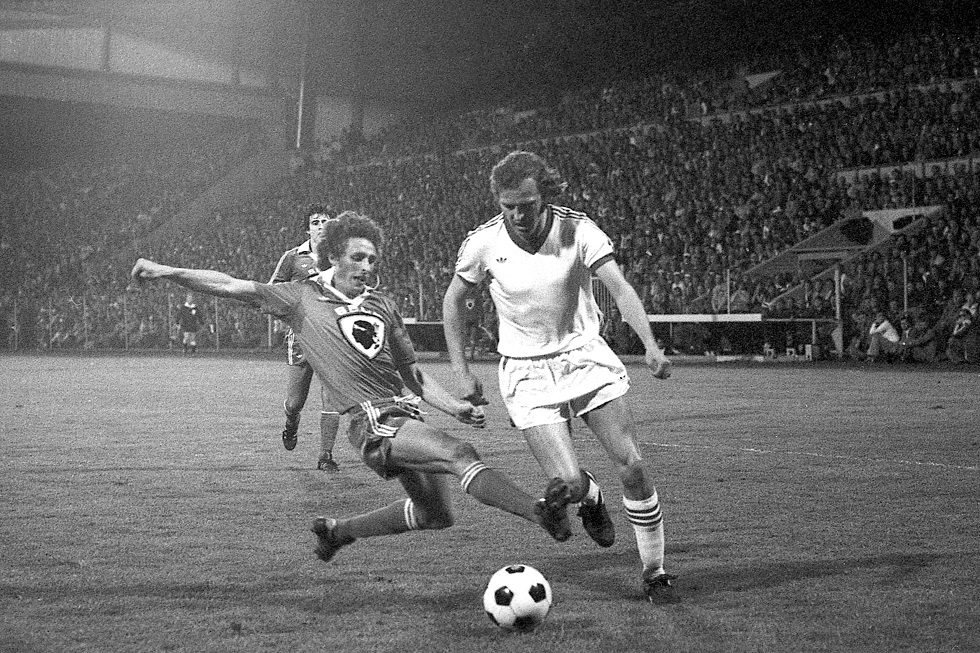
His individuality also brings René much success. "When I first joined the Dutch national team, there was a table where Cruijff, Krol, Suurbier and Van Hanegem were sitting. I came down for breakfast and Cruijff wasn't there yet. So I sat down at that little table. Suurbier said, 'That's where Cruijff is'. I look back, nowhere to be seen Cruijff. If I got up at that moment and walked away, you'd be peeved forever. De Kuil would never have done that. If you said something to him in too loud a tone, he got up with a throwaway gesture." Around matches abroad, the Van de Kerkhof brothers are never in a room together. René is "the slapie" of goalkeeper Jan van Beveren. "We were really buddies and had a lot of fun together. If we went out after the game, De Beef was downstairs even earlier than I was. Ben van Gelder once came to tell me: when you go out tonight, don't take the elevator because that little one is waiting there. All that applied to Van Gelder was that we had to be at the bus on time the next morning."
The successful team from the 1970s has a strong Brabant accent. With Adrie van Kraay and Harrie Lubse from Eindhoven, Willy van der Kuijlen and the Van de Kerkhof brothers from Helmond, Kees Krijgh from Den Bosch and Gerrie Deijkers - like Rijvers - from Breda. In addition, Huub Stevens was born in Limburg, Jan Poortvliet in Zeeland and Ernie Brandts in Gelderland. Jan van Beveren was from Amsterdam, but grew up in Drenthe and Ralf Edström in Sweden.
In those years, PSV grew into a top international club, dominating Dutch football between the two World Cup finals (1974 and 1978) and breaking through the hegemony of Ajax and Feyenoord. This resulted in three national titles, the KNVB Cup and the UEFA Cup. "Ajax and Feyenoord were top of course, but I think we had a closer and more stable team. We formed a really nice group of friends, gave everything for each other and regularly came to each other's homes for birthdays and such. There was a sense of family, which appealed to everyone. Mrs. Rijvers played an important role in this. She made sure that the women also got along well with each other, which created a close bond."
The mutual togetherness translated to the field. "We played very modern football for that time. Rijvers matched all our qualities well. With many position changes and the emerging backs Krijgh and Deijkers. We adopted the trend of Ajax. Everyone knew exactly what we had on each other and made themselves subservient to the whole. Van Kraay took care of it in terms of organization in the field, Stevens switched out his man and Poortvliet stood on the opponent's playmaker."
"There was not one player in those early years with featherweight tendencies. Later that became less. Our Wil suddenly started giving long passes over thirty or forty meters, because he also wanted to show that he could play football well. And there were more like that. But our Wil realized very quickly that he had to go back to his qualities. Taking the ball and handing it to Van der Kuijlen or Cruijff, in the Dutch team. For those qualities Cruijff wanted him there."